


A few years ago, a funded startup founder walked into a strategy session with me and said, “Deb, we are building for a mobile-first world. Obviously, we start with an app.” I smiled and asked him one simple question: “How exactly are you planning to acquire your first 50,000 users?”
That conversation captures the real tension behind the web app vs mobile app decision. And let me be explicit from the start: choosing between a web application and a mobile application is not a design decision. It is a business strategy decision. If you get this wrong, you do not just delay your launch. You burn capital, dilute focus, and slow down product-market fit.
In this article, I will walk you through a comprehensive, experience-backed perspective on web app development vs mobile app development, especially from the lens of someone running a software outsourcing and product engineering company. I will break down cost implications, time-to-market trade-offs, user acquisition strategy, scalability architecture, MVP planning, and long-term roadmap alignment.
More importantly, I will tell you what I actually recommend to founders, CTOs, and product leaders when they ask me: Should I build a web app or mobile app first? In fact, many of the top web & mobile app testing companies in India use a similar decision framework when advising clients on product strategy and release planning. By the end, you will not be confused. You will have a framework.
Why the Web App vs Mobile App Debate is Often Framed Incorrectly
Most first-time founders ask the wrong question. They ask: “Should we build a web app or a mobile app first?” However, the real question is: “What platform reduces risk while maximizing early traction and validated revenue?” Because in early-stage product development, platform choice is secondary to business validation.
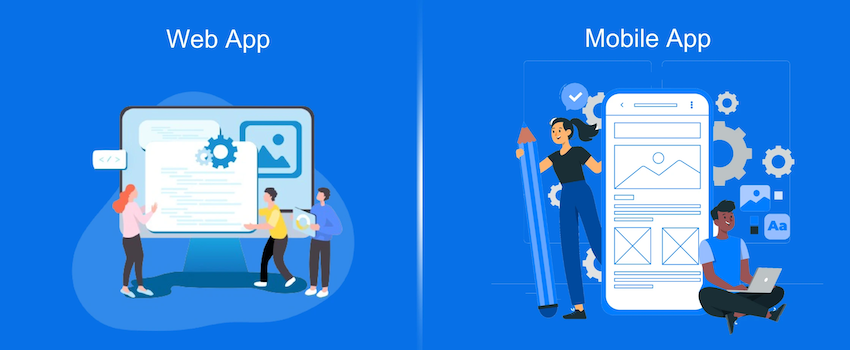
From my experience at CredibleSoft, guiding startups across SaaS, FinTech, HealthTech, logistics, and eCommerce marketplaces, I see three common mistakes:
-
- Building a native mobile app because it looks more impressive in investor decks.
- Building a web app purely because it appears cheaper without strategic alignment.
- Copying competitor platform strategy without understanding their growth model.
Instead, I recommend evaluating five core dimensions before deciding between a web app vs mobile app:
-
- User acquisition strategy
- Time to market
- Development cost and maintenance cost
- Core user behavior patterns
- Long-term product vision and scalability
Once you assess these properly, the answer usually becomes clear.
Understanding Web Apps in Depth: What is a Web App?
A web app is a browser-based application accessed via URL. Unlike static websites, modern web applications provide interactive, dynamic experiences with authentication, dashboards, APIs, payments, and complex workflows.
Examples include:
FIND OUT: Top 10 Technical SEO Techniques to Boost Your Website Rankings
-
- SaaS platforms
- CRM systems
- Marketplaces
- Admin dashboards
- Enterprise tools
- Data analytics platforms
With frameworks like React, Next.js, Vue, Angular, and modern backend stacks like Node.js, Django, or .NET Core, full-stack web apps today are extremely powerful and scalable.
In fact, modern single-page applications can feel nearly indistinguishable from native apps in many use cases.
Why I Frequently Recommend Building a Web App First in 2026
Let me take a strong stance. In most early-stage SaaS startups, B2B platforms, and marketplace businesses, I recommend starting with a web app MVP. Here is why.
1. Faster MVP Development and Validation
First, web applications allow significantly faster time to market. You deploy instantly. There is no App Store approval, or any Play Store review. Moreover, there are no app policy compliance delays.
Therefore, if your growth plan includes:
-
- Build the MVP
- SEO and content marketing
- Google Ads or LinkedIn Ads
- Direct B2B sales
- Strategic partnerships
- Cold outreach campaigns
A web application removes unnecessary friction. For example, one of our HR tech clients planned to build a mobile app first. However, after analyzing their user journey, we realized their target audience was HR managers working primarily on desktops. So we launched a web app MVP within 8 weeks.
As a result, they validated their value proposition faster, captured 3,000 paying users, and only then expanded to mobile. That decision saved them both time and nearly six figures in early capital.
2. Lower Initial Development Cost
When comparing web app vs mobile app development cost, web usually wins for MVP stage.
With mobile apps, you must choose:
-
- Native iOS and native Android
- Cross-platform mobile app development using Flutter or React Native
- Hybrid frameworks
Even with cross-platform solutions, testing and performance optimization across devices increase complexity. Meanwhile, web development typically requires one primary frontend codebase and one backend system.
Typical MVP cost ranges:
-
- Web app MVP: $15,000 to $35,000
- Single native mobile app: $25,000 to $55,000
- iOS + Android native apps: $35,000 to $75,000
Although costs vary by scope, web-first product strategy often preserves capital in early stages. And capital efficiency matters.
3. Easier Iteration and Agile Product Development
Early-stage startups pivot frequently. Features evolve. Assumptions break. UX changes weekly.
With web apps:
-
- You can deploy updates instantly.
- You can roll back quickly.
- You can A/B test with ease.
- Users automatically see the latest version.
Conversely, mobile apps introduce version fragmentation. Some users do not update. Store reviews delay bug fixes. Approval processes slow down iteration. Therefore, if speed of iteration is critical, web-first usually supports agile product development better.
4. Superior for Data-Heavy and Workflow-Intensive Platforms
If your application includes:
-
- Complex dashboards
- Multi-level user permissions
- Advanced reporting
- Admin controls
- Large data tables
- Long-form documentation workflows
Web interfaces provide better usability. For instance, we built a logistics SaaS solution where dispatch managers handled 30+ live shipments simultaneously. The dashboard required multi-screen views and rapid data filtering. A mobile interface would have reduced operational efficiency significantly.
In such cases, web application architecture aligns naturally with the business workflow.
5. SEO, Organic Traffic, and Inbound Growth
This is critical. Mobile apps do not rank on Google in the same way web apps do.
If your strategy involves:
-
- SEO-driven lead generation
- Organic content marketing
- Keyword ranking for high-intent queries
- Landing page optimization
Then a web app supports inbound growth far better. For startups bootstrapping or managing limited marketing budgets, SEO-friendly web applications can significantly reduce customer acquisition cost.
When a Mobile App Should Be Built First in 2026
Now let’s be balanced. Mobile-first strategy is absolutely justified in certain scenarios.
1. Your Product Is Behavior-Driven and Habit-Based
If your value proposition depends on:
-
- Real-time notifications
- Daily active usage
- Push engagement loops
- On-the-go accessibility
- Instant camera or GPS usage
FIND OUT: Offshore Software Development in 2026: Costs, Risks & How to Choose the Right Partner
Then mobile app development becomes strategically important. Industries where mobile-first often makes sense include:
-
- Ride-sharing
- Fitness tracking
- Social networking
- Food delivery
- Dating platforms
In one marketplace project we handled, 80 percent of users booked services while commuting. In that case, mobile usage patterns dictated the platform decision.
2. Consumer-Focused B2C Products
If your primary audience consists of consumers who rely heavily on smartphones, then native mobile apps can improve engagement and retention.
However, I still advise caution. Before committing to full-scale iOS and Android development, consider:
-
- Mobile-responsive web app
- Progressive Web App (PWA)
- Hybrid mobile app
Sometimes, a well-built PWA delivers enough functionality at a fraction of the cost.
3. Push Notifications Are Central to Monetization
Push notifications significantly impact retention metrics. If your revenue model depends on:
-
- Flash sales
- Limited-time offers
- Daily reminders
- Community alerts
Mobile apps provide stronger re-engagement capabilities than web applications. Retention drives LTV. Therefore, if retention loops depend on notifications, mobile-first could be strategic.
4. Hardware Integration and Offline Functionality
If your application requires:
-
- Camera scanning
- Biometric authentication
- Bluetooth device connectivity
- Motion tracking
- Offline access
Native mobile development often becomes necessary. In those cases, forcing a web-first approach may limit product potential.
Web App vs Mobile App: Technical Architecture Considerations
Regardless of platform, backend architecture is the true foundation.
At CredibleSoft, we emphasize:
-
- API-first development
- Scalable cloud infrastructure
- Modular microservices when required
- Secure authentication frameworks
- Clean database schema design
If your backend is well-designed, you can layer both web and mobile frontends without rewriting core systems.
Therefore, my recommended sequence for many startups is:
-
- Build backend APIs
- Launch web interface
- Validate demand
- Develop mobile companion app
This staged development model reduces risk and prevents duplicated effort.
Web App vs Mobile App: Cost of Ownership Over 3 Years
Many founders calculate initial build cost but ignore lifecycle cost.
Mobile apps require:
-
- OS compatibility updates
- Device fragmentation testing
- App Store compliance updates
- Ongoing performance tuning
Over a three-year period, maintaining dual native mobile apps can cost 1.5 to 2 times more than maintaining a web application. If capital efficiency and long-term sustainability matter, this must be part of your decision matrix.
Deciding Between Web App vs Mobile App: A Strategic Decision Framework for Founders
If you are still unsure whether to choose web app vs mobile app first, use this checklist:
-
- Who is your primary user?
- Where do they use your product most?
- How will you acquire your first 10,000 users?
- What is your MVP budget?
- What is your expected daily usage frequency?
- Does your product rely on hardware sensors?
- What does your 18-month roadmap look like?
- How soon do you need validated revenue?
When in doubt, prioritize validated revenue over platform aesthetics.
Real-World Portfolio Scenario to Help Decide Between Web App vs Mobile App
Let me share another example inspired by real engagements. A FinTech startup wanted to launch a lending platform for SMEs. Initially, they insisted on mobile-first development.
However, deeper analysis revealed:
-
- SME owners preferred desktop for financial documentation.
- Loan officers required complex admin dashboards.
- Regulatory compliance required extensive document management.
We recommended web app development first.
Within six months:
-
- 2,500 businesses onboarded
- Loan processing streamlined
- Investors gained confidence
- Mobile app launched as Phase 2 for status tracking
Had they started with a mobile app, form-heavy workflows would have reduced usability dramatically. Strategy saved capital and accelerated funding.
Common Myths Around Web and Mobile App Development
Myth 1: Mobile apps are inherently more scalable.
Scalability depends on backend infrastructure, not frontend platform.
Myth 2: Investors prefer mobile apps.
Investors prefer traction, revenue, retention, and growth.
Myth 3: Web apps are outdated.
Modern web apps built with advanced JavaScript frameworks can rival native experiences in many cases.
Myth 4: You must launch on both platforms simultaneously.
Unless you have strong funding and validated demand, that approach increases risk unnecessarily.
FAQs: Web App vs Mobile App
1. Is web app development cheaper than mobile app development?
Generally, yes. A web app MVP usually costs less because it involves a single codebase and faster deployment cycles.
2. Can I build a mobile app later if I start with a web app?
Absolutely. If your backend is API-driven and scalable, you can build a native or cross-platform mobile app later without rewriting core systems.
FIND OUT: QA for Slot Machines & EGMs: A Complete Guide to RNG, Payout, and Compliance Testing
3. Should startups build both web and mobile apps at the same time?
Only if they have validated demand, sufficient funding, and a clear go-to-market strategy. Otherwise, phased rollout is smarter.
4. Are Progressive Web Apps a good compromise?
Yes. PWAs offer app-like experiences while retaining web flexibility. However, hardware access and advanced push capabilities remain limited compared to native mobile apps.
5. Which platform is better for SEO and organic growth?
Web applications are superior for SEO, content marketing, and organic search acquisition.
Final Verdict: My Clear Recommendation to Choose between a Mobile or a Web App in 2026
If you are building a SaaS platform, B2B software solution, enterprise tool, or marketplace, I strongly recommend starting with a web app. Validate demand. Generate revenue. Collect user data. Iterate rapidly. And only then build a mobile application strategically, not emotionally.
However, if your product is inherently mobile-behavior-driven with heavy reliance on push notifications, hardware sensors, or on-the-go engagement, then mobile-first may be justified. Sequence matters more than platform prestige.
At CredibleSoft, we help founders and enterprises architect scalable backend systems, design high-performance web applications, and develop robust iOS and Android apps using both native and cross-platform frameworks. Our team supports product strategy workshops, MVP development, UI/UX design, cloud architecture, DevOps implementation, and long-term maintenance.
If you are currently debating web app vs mobile app for your product roadmap, I invite you to schedule a strategic consultation with our team. We will evaluate your use case, growth model, technical requirements, and budget constraints, and provide a clear, execution-ready roadmap.

About the Author: Debasis Pradhan is the Founder and CEO of CredibleSoft, a global leader in software QA and development. With over 20 years of hands-on experience in test automation, software quality engineering, and digital transformation, he is known for his unwavering commitment to delivering enterprise-grade software solutions with precision and reliability. 🔔 Follow Deb on LinkedIn