


A few months ago, a startup founder approached me with a frustrating story. His team had spent nearly $180,000 building a mobile application that technically worked. However, every update became slower, new features took longer to ship, and performance issues started appearing as the user base grew. The product was not failing because of the idea or the developers. Instead, the real mobile app development mistake was the mobile app tech stack chosen early in the project.
Choosing the right mobile app tech stack in 2026, particularly deciding between Native vs. Cross-Platform mobile app development, is one of the most critical technical decisions founders and CTOs must make. This decision influences development cost, time to market, performance, scalability, and long-term product maintainability.
At CredibleSoft, I regularly advise founders, product leaders, and engineering teams on mobile app development frameworks, architecture decisions, and software outsourcing strategies. Over the past decade, my team has helped companies launch scalable mobile platforms across industries such as SaaS, logistics, fintech, healthcare, and digital marketplaces. Because of that experience, I have seen firsthand how the right mobile development stack accelerates growth, while the wrong one creates technical debt that slows companies down.
In this comprehensive guide, I will walk you through how experienced technology leaders evaluate modern mobile development frameworks, including Swift, Kotlin, Flutter, and React Native. In addition, I will explain how to approach Native vs Cross Platform mobile development, what factors influence the decision, and how companies should design a scalable mobile application architecture for long term success.
By the end of this article, you will have a practical framework for choosing the best mobile app technology stack for startups, SaaS platforms, and enterprise applications. Let us begin with the most important strategic decision.
What is a Mobile App Tech Stack?
Before comparing Native vs. Cross-Platform frameworks, it helps to clarify what we mean by a mobile app tech stack. A mobile tech stack refers to the collection of technologies used to design, build, deploy, and maintain a mobile application. This includes the mobile development framework, programming languages, backend architecture, APIs, database infrastructure, and cloud hosting environment.
In other words, the mobile application technology stack usually consists of several layers:
-
- Frontend mobile framework
- Programming language
- Backend services and APIs
- Database and storage systems
- Cloud infrastructure
- DevOps and deployment pipelines
Many founders focus only on the mobile framework. However, successful products require a well designed mobile app architecture that supports scalability, performance, and long term maintainability.
Therefore, when evaluating the best mobile app tech stack, it is important to consider the entire technology ecosystem rather than a single tool.
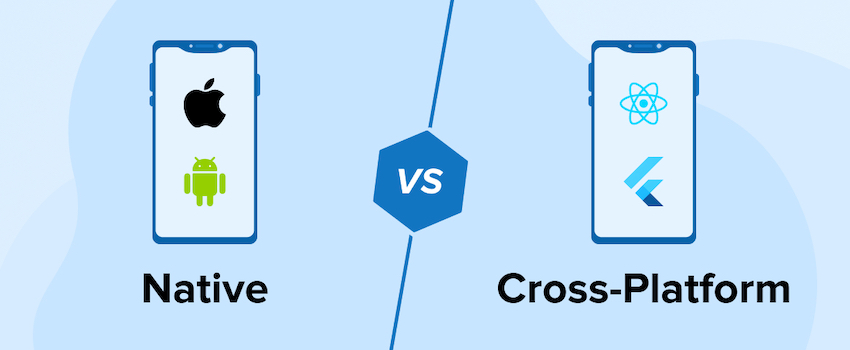
Native vs Cross Platform Mobile App Development
One of the most common questions I hear from founders is simple. “Should we build native apps or use a cross platform mobile framework?”
Although this appears to be a technical question, it is actually a strategic product decision. Your Native vs. Cross-Platform choice influences development speed, engineering cost, developer hiring, and long term platform flexibility.
Let us break down both approaches.
Native Mobile App Development
Native mobile development means building separate applications for each platform using the platform’s preferred programming language.
For example:
-
- Swift for iOS development
- Kotlin for Android development
Each platform receives its own dedicated codebase, which allows developers to optimize performance and integrate deeply with the operating system.
Benefits of Native Development
First, native mobile development delivers the best mobile app performance. Since the application interacts directly with system APIs, it can fully utilize hardware capabilities.
FIND OUT: Web App vs Mobile App: Which Should You Develop First in 2026?
Second, native development enables deeper platform specific development. This means better integration with device sensors, cameras, biometric authentication, and advanced animations.
Third, native applications typically provide a smoother user experience because they follow platform design guidelines more closely.
Consequently, companies building high performance mobile applications often choose native frameworks.
When Native Development Is Ideal
In my experience, native development is particularly valuable for products such as:
-
- fintech trading applications
- augmented reality mobile apps
- high performance gaming platforms
- real time logistics tracking systems
These applications require extremely responsive interfaces and optimized system interactions.
Drawbacks of Native Development
However, native development introduces additional complexity.
Because each platform requires its own codebase, companies must maintain separate engineering teams for iOS and Android. This increases development costs and can slow feature releases.
Therefore, many startups consider cross platform frameworks instead.
Cross Platform Mobile App Development
Cross platform mobile development allows developers to build a single codebase that runs on both iOS and Android devices.
Popular cross platform frameworks include:
-
- Flutter
- React Native
These frameworks simplify development by enabling shared code across multiple platforms.
Benefits of Cross Platform Development
First, cross platform frameworks significantly reduce development time. Teams can release applications faster because they maintain one unified codebase.
Second, cross platform development lowers engineering costs. Instead of managing two development teams, companies can operate with a smaller group of engineers.
Third, cross platform frameworks support rapid iteration cycles, which is particularly important for startup mobile app development.
Consequently, many companies launching minimum viable products (MVPs) prefer cross platform frameworks.
Limitations of Cross Platform Frameworks
Although cross platform tools have improved significantly, some limitations still exist.
For example, complex hardware integrations occasionally require writing native modules. In addition, performance may be slightly lower for extremely demanding applications.
Nevertheless, modern frameworks such as Flutter and React Native provide excellent performance for most use cases.
Swift: The Foundation of iOS App Development
Swift is Apple’s modern programming language used for building applications across the Apple ecosystem.
These platforms include:
-
- iPhone
- iPad
- Apple Watch
- Apple TV
- macOS
Because Apple actively invests in Swift, the language continues evolving rapidly.
Why Swift is Ideal for iOS Apps
Swift offers several advantages for iOS native development.
First, Swift delivers excellent performance because it compiles directly into optimized machine code. Second, the language includes strong safety features that help developers avoid common programming errors. Third, Swift integrates seamlessly with Apple’s development environment, including Xcode, SwiftUI, and UIKit.
As a result, Swift remains the preferred technology for building premium iOS mobile applications.
Real World Example from Our Consulting Work
A media technology startup approached our team at CredibleSoft while building a mobile video streaming platform.
Initially, they considered using a cross platform framework. However, their product required low latency streaming and advanced video processing.
After evaluating the requirements, we recommended Swift based iOS development. This decision allowed the platform to achieve smoother video playback, better battery optimization, and improved crash stability.
Advantages of Swift
-
- exceptional iOS performance
- deep integration with Apple APIs
- long term platform support
- strong development tools
Limitations of Swift
-
- iOS only development
- separate Android application required
- higher development cost
Kotlin: The Modern Language for Android App Development
Kotlin is the official programming language recommended by Google for Android app development.
Although Android development originally relied heavily on Java, Kotlin introduced several improvements that made development faster and safer.
Why Kotlin Became the Android Standard
Kotlin offers modern language features that simplify Android development.
For example:
-
- concise syntax
- built in null safety
- improved code readability
- compatibility with Java libraries
Because of these advantages, most new Android applications today use Kotlin.
When Kotlin is the Best Choice
Kotlin works particularly well for companies targeting markets where Android devices dominate.
FIND OUT: Top 10 Technical SEO Techniques to Boost Your Website Rankings
These markets include India, Southeast Asia, Africa, and Latin America. In these regions, Android represents the majority of smartphone usage.
Example from a Logistics Platform
One of our enterprise clients built a mobile platform for managing logistics drivers across multiple regions.
Since most drivers used affordable Android devices, performance optimization was critical.
Our engineering team chose Kotlin to build the Android application. This decision enabled reliable performance even on lower end devices.
Advantages of Kotlin
-
- official Android language
- excellent Java interoperability
- strong Android developer ecosystem
- high performance mobile apps
Limitations of Kotlin
-
- Android specific development
- separate iOS development required
- longer development timeline compared to cross platform frameworks
Flutter: A Powerful Cross Platform Mobile Framework
Flutter has quickly become one of the most popular frameworks for cross platform mobile app development.
Developed by Google, Flutter allows developers to create visually rich applications using a single codebase.
Why Flutter is Growing So Quickly
Flutter uses its own rendering engine rather than relying on native UI components.
As a result, developers can build highly customizable interfaces while still achieving strong performance.
Flutter also includes a powerful feature known as Hot Reload, which allows developers to instantly preview changes during development. Consequently, teams can build products much faster.
Example from a Marketplace Startup
A European startup approached our team with a tight deadline. They needed a working marketplace application within four months. Instead of building two separate mobile apps, we recommended Flutter.
Using Flutter enabled us to deliver:
-
- shared codebase for iOS and Android
- faster UI development
- reduced QA cycles
Within six months of launch, the platform reached more than 120,000 users.
Advantages of Flutter
-
- fast development cycles
- strong UI capabilities
- near native performance
- single codebase architecture
Limitations of Flutter
-
- slightly larger application size
- smaller developer ecosystem compared with JavaScript frameworks
- occasional native integration complexity
React Native: A Flexible Framework for Startup Teams
React Native is another widely adopted framework for cross platform mobile development.
Developed by Meta, React Native allows developers to build mobile applications using JavaScript and the React ecosystem.
Why React Native Remains Popular
Many organizations already use React for web applications.
Because React Native shares similar development patterns, web engineers can easily contribute to mobile projects.
As a result, companies often choose React Native to simplify hiring and reduce onboarding time.
Example from a SaaS Platform
One of our SaaS clients had an established React web application.
They wanted to extend their platform to mobile devices quickly.
By adopting React Native, their existing web developers were able to participate in mobile development. This significantly accelerated their release timeline.
Advantages of React Native
-
- large developer community
- strong JavaScript ecosystem
- faster developer onboarding
- shared development knowledge with web teams
Limitations of React Native
-
- performance overhead for complex applications
- occasional native module requirements
- UI consistency challenges in advanced cases
Mobile Backend Architecture That Supports Your Tech Stack
Choosing a mobile framework is only part of the overall system design. Equally important is the mobile backend architecture. Most modern mobile applications rely on cloud based backend systems that provide authentication, data storage, and API services.
Common backend technologies include:
-
- Node.js
- Python
- Java
- Go
These backend systems typically expose APIs that mobile apps use to communicate with databases and services. Furthermore, many modern platforms adopt microservices architecture to support scalability.
When designing a mobile app technology stack, teams must ensure that the mobile framework integrates well with the backend infrastructure.
Native vs. Cross-Platform App Development: Developer Hiring and Talent Availability
Another factor many companies overlook is developer availability. Hiring experienced Swift or Kotlin engineers can be more challenging in some regions.
Meanwhile, JavaScript developers are widely available due to the popularity of web development. Consequently, organizations sometimes choose React Native mobile development simply because it aligns with their existing talent pool.
Flutter adoption is also growing quickly, which means the Flutter developer ecosystem continues expanding each year. Therefore, CTOs should consider hiring strategy when evaluating a mobile development framework.
Mobile App Maintenance and Long Term Costs
Launching an application is only the beginning. Successful products require continuous updates, feature development, and performance optimization.
This is why mobile app maintenance cost should always influence the technology decision. Cross platform frameworks often reduce long term maintenance complexity because both platforms share the same codebase.
However, native applications may offer better performance optimization in large scale systems. Ultimately, companies must balance development speed, maintenance cost, and scalability.
Mobile App Security Considerations
Security is another critical factor when choosing a mobile technology stack. Applications handling sensitive data must implement robust security practices.
These may include:
-
- secure authentication systems
- encrypted API communication
- secure data storage
- biometric authentication
For industries such as fintech and healthcare, secure mobile app architecture is absolutely essential. Therefore, technology decisions should always consider security requirements.
Mobile Development Trends Shaping 2026
Mobile technology continues evolving rapidly. Several trends are shaping the future of mobile app development frameworks.
First, AI assisted development tools are improving engineering productivity. Second, cross platform frameworks are becoming increasingly mature. Third, many companies are building ecosystem platforms that combine mobile apps with web platforms and cloud services.
As a result, choosing the right mobile application tech stack requires careful long term planning.
FAQs: Native vs. Cross-Platform App Development
FIND OUT: Offshore Software Development in 2026: Costs, Risks & How to Choose the Right Partner
1. What is the best mobile app tech stack in 2026?
The best tech stack depends on your goals. Flutter offers an excellent balance between development speed and performance, while native technologies like Swift and Kotlin provide deeper platform optimization.
2. Should startups choose native or cross platform development?
Most startups benefit from cross platform frameworks because they enable faster MVP development and lower engineering costs.
3. Is Flutter better than React Native?
Flutter generally offers stronger UI performance and consistency, while React Native benefits from a larger developer ecosystem.
4. When should companies choose native development?
Native development works best when performance, hardware integration, or platform specific features are critical.
5. What mobile tech stack works best for outsourced development projects?
In many outsourcing engagements, Flutter provides the best balance between speed, cost efficiency, and maintainability.
Final Thoughts: Choosing the Right Mobile App Tech Stack
Choosing the right mobile app tech stack is one of the most important technical decisions founders and CTOs will make. Native technologies such as Swift and Kotlin provide exceptional performance and deep platform integration. However, cross platform frameworks like Flutter and React Native enable faster development and lower costs.
Ultimately, the right native vs. cross-platform solution depends on your product goals, target audience, engineering resources, and long term roadmap. At CredibleSoft, our engineering teams regularly help startups and enterprises design scalable mobile application architectures using Swift, Kotlin, Flutter, and React Native. We support clients across the full development lifecycle including product strategy, UX design, mobile development, backend architecture, and long term maintenance.
If you are currently planning a new mobile product or evaluating your mobile development technology stack, I would be happy to discuss your project. Feel free to schedule a conversation with our team at CredibleSoft so we can review your requirements and recommend the most practical approach for building a scalable mobile application. The right technology decision made today can save months of engineering effort tomorrow.

About the Author: Debasis Pradhan is the Founder and CEO of CredibleSoft, a global leader in software QA and development. With over 20 years of hands-on experience in test automation, software quality engineering, and digital transformation, he is known for his unwavering commitment to delivering enterprise-grade software solutions with precision and reliability. 🔔 Follow Deb on LinkedIn